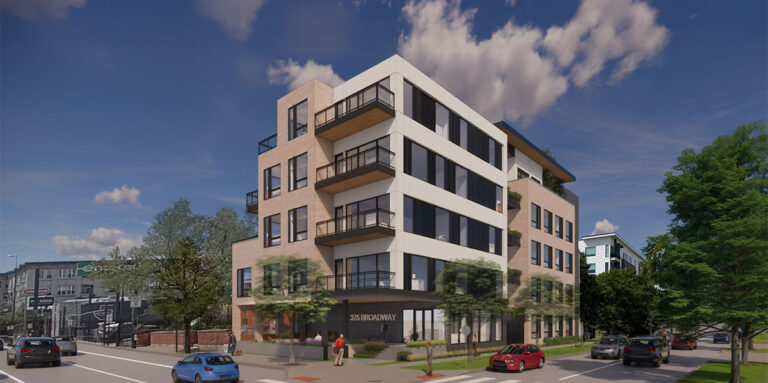
Missing middle housing is based on the idea that true attainability lies not in mass housing towers but in more modest, human-scaled forms—dwellings like cottages and cluster courts that fit seamlessly into neighborhoods and lower per-unit costs through smarter design. Yet regulatory constraints in cities and suburbs across the country (such as density limits, parking mandates, and building codes) have increasingly become obstacles to building these types of homes. Meanwhile, best practices in residential architecture show that right-sizing units, increasing density with vertical stacking, minimizing the importance of cars, and providing shared open spaces are ideal for livability and encouraging community. As we refocus on the cottage cluster, also known as the cottage court, let’s explore how this residential typology offers a bridge to truly attainable missing middle housing—and what design, policy, and code shifts are needed to make it a practical, real option.
Table of Contents
- Why Cottage Cluster Homes?
- KGA Case Study: Changing the Zoning Changes the Game
- Designing Cottage Homes That Live Large
- Built In Livability + Sustainability
- Missing Middle Housing: Building the Future We Want
Why Cottage Cluster Homes?
A cluster of cottage homes can do more than just deliver missing middle housing—it can regenerate what many suburbs have lost: walkability, neighborliness, and shared identity. When cottages are arranged around a central green, courtyard, or communal gardens, those shared spaces become places where people meet—children play together, and neighbors chat from porches. There’s also beauty in adjacency: small scale, gentle transitions between private and public, paths rather than long driveways, front porches facing shared greens, and minimal backyard fencing to allow visual permeability. Mixed household types—downsizers, young families, couples—can inhabit these clusters, and their varied rhythms bring richness to the place: quieter mornings, lively evenings, shared obligations (snow-shoveling, gardening) become relational, not burdensome.
KGA Case Study: Changing the Zoning Changes the Game
KGA recently worked with a client who was trying to develop housing on a 4-acre infill property. As-of-right zoning required 7,500 SF minimum lot sizes and mandated large setbacks (25’ front, 10’ rear, and 7’ side). These are pretty typical numbers for the area, as well as most American suburbs. The end result was a property that could only yield 17 legal lots. The problem—to make the economics pencil, these large lots demanded larger homes that were more than double the price the majority of buyers in the area could afford.

Total Lots: 17 | Density: 4.25 units/acre | Average Lot: 7,615 SF | Average Home: 3,000 SF
The solution—change the zoning. This developer, in collaboration with local planning officials and a few open-minded elected officials, designed zoning variances that would allow smaller cottage-style homes. They reduced lot minimums from 7,500 SF to 2,500 SF, and reduced setbacks to 5’ for the fronts and sides.
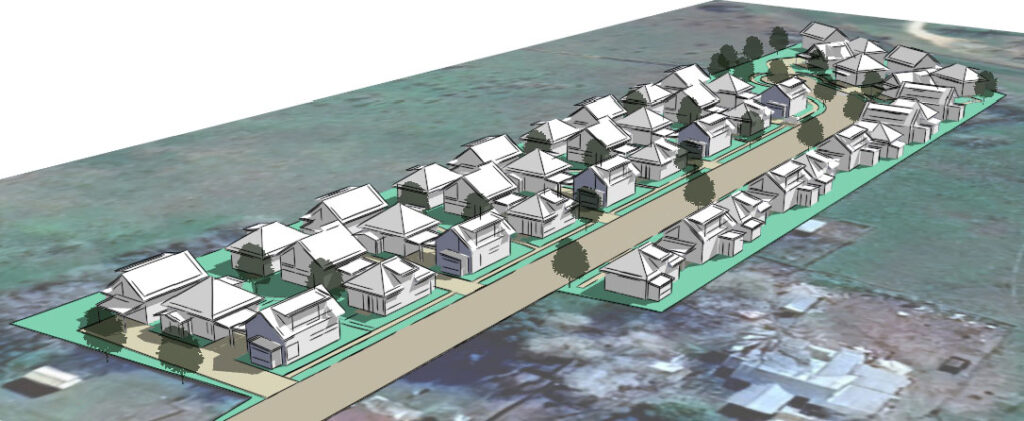
The end product is a neighborhood with 2.5 times more homes situated on shared courtyards that are the right size for young families, while also being affordably priced. And for the developer, the economics of the deal are healthier too.
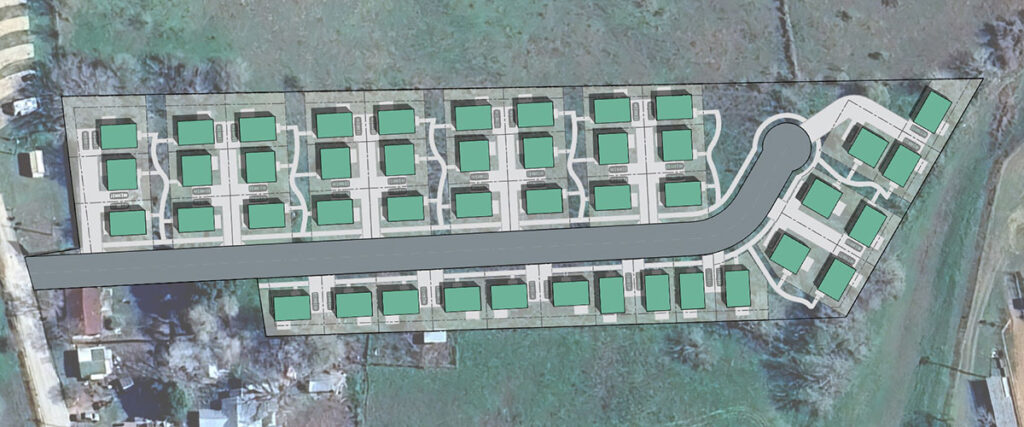
Total Lots: 44 | Density: 11 units/acre | Average Lot: 2,604 SF | Average Home: 1,468 SF
Designing Cottage Homes That Live Large
The secret to livable cottage homes isn’t more square footage; it’s smarter design. First, it’s about scale and proportion. Simple massing, pitched rooflines, thoughtful fenestration, and inviting porches can give a home character and presence without blowing up the footprint. Interior layouts are designed to stretch every square foot with open floor plans, flexible rooms that can shift from office to guest room, high ceilings in primary living spaces, and lots of generously sized windows that provide abundant natural light and expand the sense of space by visually connecting the occupant to the outside. Using outdoor living spaces—like porches, patios, and courtyards—in smart ways functionally extends interior areas. Paying special attention to materials and detailing elevates these modest homes, transforming simplicity into quality. Lastly, being vigilant about window placement, building orientation, and landscaping is critical when designing homes that balance proximity and privacy.
Built In Livability + Sustainability
Smaller homes already begin with environmental savings: less material use, lower heating/cooling loads, and reduced impervious surface by virtue of smaller footprints. Clustering them magnifies the benefit—shared landscape reduces private lawns; compact streets or pedestrian-first circulation minimizes paving; planting, shade, and orientation optimize daylight and comfort without overspending on mechanical systems. Walkability and access to amenities—parks, trails, or even small shops or community buildings—in master-planned contexts allow for less dependence on cars and more efficient infrastructure. In well-designed cottage clusters, these design decisions translate into tangible value: lower maintenance, stronger resale, happier and healthier residents, and communities that people want to stay in—and invite others to visit.
Missing Middle Housing: Building the Future We Want
Ultimately, cottage clusters are more than just a new housing type; they are a shift in mindset. A mindset that asks us to trade in privacy walls for shared greens and car-centric sprawl for walkable neighborhoods focused on community. And they do that while ushering more people onto the pathway to home ownership. But to do this, communities need to embrace flexible land use policies that allow residential developers to build homes that buyers want and, most importantly, can actually afford.